
|
Affiliation |
Vice President Vice President |
|
Title |
Professor |
|
Laboratory Phone number |
0985-58-7204 |
|
Contact information |
|
|
External Link |
|
|
Related SDGs |
|
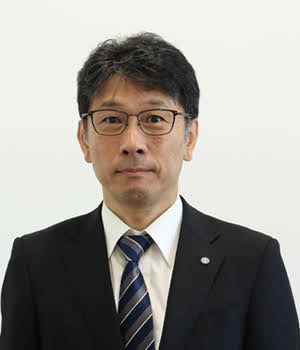
KAWAHARA Satoshi
|
|
|





Degree 【 display / non-display 】
-
Doctor (Agriculture) ( 2003.3 Kagoshima University )
-
農学修士 ( 1994.3 九州大学 )
-
農学士 ( 1992.3 九州大学 )
Research Areas 【 display / non-display 】
-
Life Science / Food sciences
-
Life Science / Animal production science
Campus Career 【 display / non-display 】
-
University of Miyazaki Faculty of Agriculture Region of Animal and Plant Biosciences Professor
2025.04 - Now
-
University of Miyazaki Vice President Vice President Vice President
2024.10 - Now
-
University of Miyazaki Organization for Learning and Student Development Division for Student Support
2022.10 - 2024.09
-
University of Miyazaki Faculty of Agriculture Department of Animal and Grassland Sciences Professor
2016.04 - 2025.03
-
University of Miyazaki Center for Animal Disease Control Division of Livestock Production Research & Support Professor
2014.06 - Now
Professional Memberships 【 display / non-display 】
-
日本畜産学会
1992.4
-
Japan Society of Meat Science and Technology
2021.4
-
The Japanese Association for the Study of Taste and Smell
2018.5
-
Japanese Society of Food Microbiology
2008.4
Papers 【 display / non-display 】
-
Nakanishi T., Nemoto S., Erickson L., Kawahara S.
Animal Bioscience 39 ( 7 ) 2026.7
Publishing type:Research paper (scientific journal) Publisher:Animal Bioscience
Objective: This study investigated the role of ferroptosis, an iron-dependent form of regulated cell death, in meat quality by comparing the effects of pre-slaughter administration of teriflunomide, an inhibitor of dihydroorotate dehydrogenase (DHODH), which can induce ferroptosis, and dietary vitamin E, an antioxidant that can suppress ferroptosis, on the post-mortem biochemical properties of broiler chicken muscle. Methods: Broiler chickens were randomly allocated to three groups: control, teriflunomide-treated, and vitamin E-supplemented. Teriflunomide was administered subcutaneously prior to slaughter, and vitamin E was provided in the diet. Post-mortem thigh muscles were analyzed for oxidative status, such as lipid peroxide levels and the ratio of reduced to oxidized glutathione (GSH/GSSG); the expression of ferroptosis-related genes, such as glutathione peroxidase 4 (GPX4) and acyl-CoA synthetase long-chain family member 4 (ACSL4); and meat quality traits such as pH, color, and water-holding capacity. Results: Teriflunomide significantly reduced the GSH/GSSG ratio (p<0.001) and increased ACSL4 expression compared with the control and vitamin E groups (p<0.05), indicating elevated oxidative stress. Vitamin E significantly increased GPX4 expression compared with teriflunomide (p<0.05). Lipid peroxidation was numerically lower in the vitamin E group than in the other groups, although the differences were not statistically significant (p = 0.062). Teriflunomide slowed post-mortem pH decline (p<0.001) and decreased L* and b* values, whereas a* values were higher (p<0.05). Vitamin E maintained higher L* and b* values and slightly lower a* values than the control (p<0.05). No statistically significant differences were observed in water-holding capacity among the groups. Conclusion: These findings indicate that ferroptosis-related processes play a critical role in regulating post-mortem meat quality in broiler thigh muscles. DHODH inhibition by teriflunomide and antioxidant treatment with vitamin E yielded contrasting effects.
DOI: 10.5713/ab.250847
-
仲西 友紀, 河原 聡
Animal bioscience 39 ( 7 ) 250847 2026.3
Language:English Publishing type:Research paper (scientific journal)
Objective
This study investigated the role of ferroptosis, an iron-dependent form of regulated cell death, in meat quality by comparing the effects of pre-slaughter administration of teriflunomide, an inhibitor of dihydroorotate dehydrogenase (DHODH), which can induce ferroptosis, and dietary vitamin E, an antioxidant that can suppress ferroptosis, on the post-mortem biochemical properties of broiler chicken muscle.
Methods
Broiler chickens were randomly allocated to three groups: control, teriflunomide-treated, and vitamin E-supplemented. Teriflunomide was administered subcutaneously prior to slaughter, and vitamin E was provided in the diet. Post-mortem thigh muscles were analyzed for oxidative status, such as lipid peroxide levels and the ratio of reduced to oxidized glutathione (GSH/GSSG); the expression of ferroptosis-related genes, such as glutathione peroxidase 4 (GPX4) and acyl-CoA synthetase long-chain family member 4 (ACSL4); and meat quality traits such as pH, color, and water-holding capacity.
Results
Teriflunomide significantly reduced the GSH/GSSG ratio (p<0.001) and increased ACSL4 expression compared with the control and vitamin E groups (p<0.05), indicating elevated oxidative stress. Vitamin E significantly increased GPX4 expression compared with teriflunomide (p<0.05). Lipid peroxidation was numerically lower in the vitamin E group than in the other groups, although the differences were not statistically significant (p = 0.062). Teriflunomide slowed post-mortem pH decline (p<0.001) and decreased L* and b* values, whereas a* values were higher (p<0.05). Vitamin E maintained higher L* and b* values and slightly lower a* values than the control (p<0.05). No statistically significant differences were observed in water-holding capacity among the groups.
Conclusion
These findings indicate that ferroptosis-related processes play a critical role in regulating post-mortem meat quality in broiler thigh muscles. DHODH inhibition by teriflunomide and antioxidant treatment with vitamin E yielded contrasting effects. -
Nakanishi T., Wakamatsu J., Nemoto S., Yamamoto A., Erickson L., Kawahara S.
Comparative Biochemistry and Physiology Part A Molecular and Integrative Physiology 309 111919 2025.11
Authorship:Last author Language:English Publishing type:Research paper (scientific journal) Publisher:Comparative Biochemistry and Physiology Part A Molecular and Integrative Physiology
Ferroptosis is an iron-dependent regulated cell death characterized by lipid peroxidation. In the skeletal muscle of mammals, where oxidative stress plays an important role in lipid peroxidation, ferroptosis is involved in various diseases and aging. However, the role of ferroptosis in avian skeletal muscle remains underexplored. This study investigated the gene expression of glutathione peroxidase 4 (GPX4) and other ferroptosis-related genes, along with oxidative stress markers in chicken skeletal muscles, focusing on the breast (pectoralis major) and thigh (iliotibialis lateralis) muscles. Gene expression was analyzed using quantitative reverse transcription polymerase chain reaction. Lipid peroxidation and oxidative stress were evaluated by measuring malondialdehyde (MDA), a lipid peroxidation byproduct, and by evaluating the ratio of reduced glutathione (GSH) to oxidized glutathione (GSSG). Our results showed that GPX4 gene expression was significantly higher in the thigh muscle compared to the breast muscle. Ferroptosis suppressor protein 1 (FSP1) expression was also higher in the thigh muscle, while ferritin heavy chain 1 (FTH1) expression was lower in the thigh muscle than in the breast muscle. In contrast, lipid peroxidation, indicated by MDA levels, was higher in the breast muscle, correlating with a lower GSH/GSSG ratio, indicating that the breast muscle is more susceptible to ferroptosis than the thigh muscle. Additionally, the expression of FSP1 and FTH1 showed significant correlations with oxidative stress markers, highlighting their roles in regulating ferroptosis in avian skeletal muscle. This study provides insights into the molecular mechanisms of ferroptosis in avian skeletal muscle, suggesting that regulatory processes may vary between muscle types.
-
Kanai Yuki, Asakura Mai, Nagayama Shiho, Takahashi Katsuyoshi, Kawahara Satoshi, Yamasaki Masao
Nippon Shokuhin Kagaku Kogaku Kaishi 72 ( 8 ) 267 - 277 2025.8
Language:English Publishing type:Research paper (scientific journal) Publisher:Japanese Society for Food Science and Technology
The term “<i>koku</i>” is often used by consumers as a sensory descriptor for yogurt-related products. The objective of this study was to understand the sensation of “<i>koku</i>” by exploring the sensory attributes of yogurt drinks consumers recognize as forming “<i>koku</i>”. Initially, a QDA test was conducted on eight commercial samples to identify and measure sensory attributes using the vocabulary derived from consumers. Seven samples selected from the QDA results were then used to evaluate the intensity of “<i>koku</i>” using an untrained panel (n=38). Based on the results of “<i>koku</i>” intensity, a cluster analysis of the 38 panelists was conducted, which resulted in three clusters of 28 (72%), 7 (18%) and 3 (8%) panelists. By performing PLS regression analysis on the “<i>koku</i>” intensity of each cluster and the QDA results, we were able to estimate the sensory attributes associated with the perception of “<i>koku</i>” in each cluster. Based on the findings of this study, further refinement of the sensory attributes may serve as an indicator in determining the sensory attributes that should be emphasized in the development of “<i>koku</i>” yogurt drink products.
-
Ante-mortem glutathione peroxidase 4 inhibition by RSL3 affects post-mortem meat quality in broiler chickens Reviewed International coauthorship
Nakanishi T., Uchiyama T., Uchida M., Erickson L., Kawahara S.
British Poultry Science 2024.10
Authorship:Last author Publishing type:Research paper (scientific journal) Publisher:British Poultry Science
1. This study investigated the role of glutathione peroxidase 4 (GPX4), a key regulator of ferroptosis, a form of programmed cell death, in muscle biochemistry and meat quality, utilising broiler chickens whose ante-mortem GPX4 activity was inhibited pharmacologically. 2. Male broilers were divided into two groups, each receiving ante-mortem administration of the GPX4 inhibitor, Ras-selective lethal 3 (RSL3), or a vehicle only. After slaughter, breast muscles were collected and stored for 48 h. The expressions of ferroptosis-related genes, glutathione levels, pH, colour and water-holding capacity were evaluated at multiple time points during the storage period. 3. The RSL3 treatment decreased the expression of GPX4 and ferritin heavy chain 1, which are negative regulators of ferroptosis, while it increased the expression of a ferroptosis accelerator, acyl-CoA synthetase long chain family member 4. The ratio of reduced to oxidised glutathione was significantly decreased in the RSL3 group. The RSL3 treatment decelerated post-mortem pH decline and colour changes, such as a decrease in L* and an increase in a* were observed in the RSL3 group. In addition, the RSL3 group showed increased levels of water-holding capacity. 4. These findings suggested that ante-mortem GPX4 activity plays a role in determining meat quality, implying the possible involvement of ferroptosis in the mechanism by which skeletal muscle is converted after slaughter into meat that is eaten.
Books 【 display / non-display 】
-
Analysis of volatile components that from the scent of male pigs and identification of terms that describe them
( Role: Sole author)
2023.11
Language:Japanese Book type:Report
-
Development of a new soft chicken loaf particularly for elderly persons and infants
Muguruma M., Ahhmed A.M., Namba Y., Kawahara S., Ohta K., Tanabe H., Kuroda R., Nakade K., Numata M., Nakamura T.( Role: Sole author)
52nd International Congress of Meat Science and Technology: Harnessing and exploiting global opportunities 2023.8 ( ISBN:9789086865796, 9789086860104 )
Language:English Book type:Scholarly book
-
Effects of various treatments on the texture softening of postbreeding mature cows meat
Ahhmed A.M., Matsumoto N., Kawahara S., Ohta K., Kuroda R., Okayama T., Nakade K., Numata M., Nakamura T., Muguruma M.( Role: Sole author)
52nd International Congress of Meat Science and Technology: Harnessing and exploiting global opportunities 2023.8 ( ISBN:9789086865796, 9789086860104 )
Language:English Book type:Scholarly book
-
生物・農学系のための統計学 : 大学での基礎学修から研究論文まで
平田 昌彦 , 宇田津 徹朗 , 河原 聡 , 榊原 啓之 ( Role: Joint author , 第4章 確率分布)
朝倉書店 2023.2 ( ISBN:9784254122855 )
Language:Japanese Book type:Textbook, survey, introduction
-
Development of quality control method of meat products based on flavor analysis
( Role: Sole author)
2021.11
Language:Japanese Book type:Report
MISC 【 display / non-display 】
-
食肉脂質の価値を探る(3) Invited
河原 聡
食肉加工情報 ( 903 ) 25 - 26 2025.9
Authorship:Lead author Language:Japanese Publishing type:Article, review, commentary, editorial, etc. (trade magazine, newspaper, online media)
-
食肉脂質の価値を探る(2) Invited
河原 聡
食肉加工情報 ( 902 ) 29 - 30 2025.8
Authorship:Lead author Language:Japanese Publishing type:Article, review, commentary, editorial, etc. (trade magazine, newspaper, online media)
-
食肉脂質の価値を探る(1) Invited
河原 聡
食肉加工情報 ( 901 ) 25 - 26 2025.7
Authorship:Lead author Language:Japanese Publishing type:Article, review, commentary, editorial, etc. (trade magazine, newspaper, online media)
-
The influences of different factors on the flavors of meat and meat products Invited Reviewed
Satoshi Kawahara
295 ( 3 ) 21 - 29 2022.9
Authorship:Lead author Language:Japanese Publishing type:Rapid communication, short report, research note, etc. (scientific journal)
-
第67回国際食肉科学技術会議(ICoMST2021)に参加して
坂田亮一、松石昌典、河原 聡ほか
食肉の科学 62 ( 2 ) 145 - 177 2021.11
Language:Japanese Publishing type:Article, review, commentary, editorial, etc. (scientific journal)
Presentations 【 display / non-display 】
-
Effect if sodium chloride on myoglobin and lipid oxidation in pork International conference
Tomohiro Uchiyama, Mizuki Kimoto, Tomonori Nakanishi, Satoshi Kawahara
The 68th International Congress of Meat Science and Technology 2022.8.23
Event date: 2022.8.22 - 2022.8.25
Language:English Presentation type:Poster presentation
-
Novel anti-inflammatory effects of 3RS, 7R, 11R-phytanic acid International conference
Tomonori Nakanishi, Keisuke Suga, Ryoji Suzuki, Satoshi Kawahara
The 68th International Congress of Meat Science and Technology 2022.8.25
Event date: 2022.8.22 - 2022.8.25
Language:English Presentation type:Poster presentation
-
食肉脂質の食品学的再検討
河原 聡
日本食肉研究会第60回大会 (麻布大学) 日本食肉研究会
Event date: 2019.3.30
Language:Japanese Presentation type:Oral presentation (general)
Venue:麻布大学
-
ジビエの食肉特性
河原 聡
宮崎大学第8回国際シンポジウム 国境なき家畜伝染病防疫対策の取り組み (宮崎大学創立330記念交流会館) 宮崎大学産業防疫リサーチセンター
Event date: 2019.2.15
Language:Japanese Presentation type:Oral presentation (general)
Venue:宮崎大学創立330記念交流会館
-
酵母エキス製造残渣による食肉製品の保水性改善
河原 聡,後藤千絵,松藤 久,脇谷晶一,仲西友紀,伏見善也
日本畜産学会第124回大会 (東京大学) 日本畜産学会
Event date: 2018.3.27 - 2018.3.29
Language:Japanese Presentation type:Oral presentation (general)
Venue:東京大学
Awards 【 display / non-display 】
-
伊藤記念財団賞
2018.6 公益財団法人 伊藤記念財団 食肉脂質の食品栄養学的再評価に関する研究
河原 聡
Award type:Award from publisher, newspaper, foundation, etc. Country:Japan
-
イノベーションネットアワード2014 全国イノベーション推進機関ネットワーク会長賞
2014.6 全国イノベーション推進機関ネットワーク 宮崎大学エコフィード高品質肉生産プロジェクト
入江正和, 河原 聡 他
Country:Japan
-
Animal Science Journal 優秀論文賞
2007.3 日本畜産学会
片山員典,河原 聡,六車三治男
Award type:Honored in official journal of a scientific society, scientific journal Country:Japan
Grant-in-Aid for Scientific Research 【 display / non-display 】
-
天然塩に含まれる無機塩類による食肉製品の脂質酸化抑制機構の解明
Grant number:23K01987 2023.04 - 2026.03
独立行政法人日本学術振興会 科学研究費基金 基盤研究(C)
Authorship:Principal investigator
-
反芻動物ルーメンにおけるフィタン酸の生成機構と機能性評価に関する研究
Grant number:15K07706 2015.04 - 2018.03
科学研究費補助金 基盤研究(C)
Authorship:Principal investigator
近年、新規機能性脂肪酸として反芻動物由来食品の脂肪中に存在するフィタン酸が注目されている。申請者はこれまでにフィタン酸の分析定量法について検討し、簡便かつ定量性の良い分析手法を考案した。本研究はこの定量法を駆使し、反芻動物ルーメン内でのフィタン酸の生成機構を解明し、乳・肉中のフィタン酸含量を制御する飼料給与体系を考案すること、そしてフィタン酸による免疫調節機能の評価を通して乳・肉の付加価値向上に資する知見を得ることが目的である。本研究で計画している具体的な検討項目は、①ルーメン微生物によるフィタン酸生成の律速段階の解明、②国内で生産される乳・肉のフィタン酸含量調査と給与飼料との相関性の解析、③フィタン酸がマウス脾臓細胞の活性に及ぼす影響の評価、の3点である。
-
食事成分に起因する乳腺炎発症の生化学的解析
Grant number:24593368 2012.04 - 2015.03
科学研究費補助金 基盤研究(C)
Authorship:Coinvestigator(s)
食事成分が異なる条件下で飼育した泌乳マウスから採取した乳汁の成分分析を実施する。
-
亜硝酸塩による豚肉製品のトランス脂肪酸生成:そのメカニズムと制御法の研究
Grant number:24580394 2012.04 - 2015.03
科学研究費補助金 基盤研究(C)
Authorship:Principal investigator
食肉加工時に添加される亜硝酸塩が,豚肉製品中にトランス脂肪酸を生成させるメカニズムを解明し,その制御法を考案する。
-
高機能発酵食肉製品の開発研究
Grant number:22580311 2010.04 - 2013.03
科学研究費補助金 基盤研究(C)
Authorship:Coinvestigator(s)
乳酸菌を用いて調製した発酵食肉製品中における機能性ペプチドの含有量変化を検討し,高機能性発酵食肉製品の開発を目指す。
Other external funds procured 【 display / non-display 】
-
Analysis of volatile components that form the scent of male pigs and identification of terms that describe them
2022.06 - 2023.03
Private Foundations
Authorship:Principal investigator Grant type:Competitive
-
Establishment of a method for quantitative analysis of a novel functional fatty acid, phytanic acid
2014.07 - 2015.03
Private Foundations
Authorship:Principal investigator Grant type:Competitive
Available Technology 【 display / non-display 】
-
畜産食品の生産・加工に伴う脂質成分の変動に関する研究

食肉加工品の脂質酸化制御に関する研究
畜産食品の付加価値向上を目指した加工技術と品質評価に関する研究Home Page: 畜産食品科学研究室
Related fields where technical consultation is available:・食肉製品,乳製品,卵製品の加工・製造
・上記食品の品質評価や食味性評価
・動物性素材の利活用Message:・共同研究の希望テーマ:畜産物の加工や品質維持・向上に関する研究であればどのようなことでも。
・肉と乳に関するご質問があれば、まずはご相談ください。